When you file a trademark application with the USPTO, you don't register the mark in general — you register it for specific goods or services. Those goods and services are organized into 45 categories called the Nice Classification. Picking the wrong one is one of the most common and costly mistakes in a trademark application.
Here's what you need to know about how this system works and why it matters for your brand.
What is Nice Classification?
The Nice Classification (formally, the International Classification of Goods and Services for the Purposes of the Registration of Marks) is a system maintained by the World Intellectual Property Organization (WIPO). It's used by trademark offices in over 150 countries, including the USPTO.
The system has 45 classes: Classes 1–34 cover physical goods, and Classes 35–45 cover services. Every trademark application must identify at least one class. You pay a separate fee per class at the USPTO (currently $350 per class with the standard application).
The class number alone isn't enough — you also need to write a description of the specific goods or services within that class. "Class 25" doesn't protect all clothing; your description defines exactly what your mark covers.
Why does it matter for searching?
Two brands can use the same name in different classes without conflict, as long as the goods or services are unrelated enough that consumers wouldn't confuse them. "Apple" in Class 33 (wines) is a different matter from "Apple" in Class 9 (computers and electronics) — and both are theoretically possible as separate registrations.
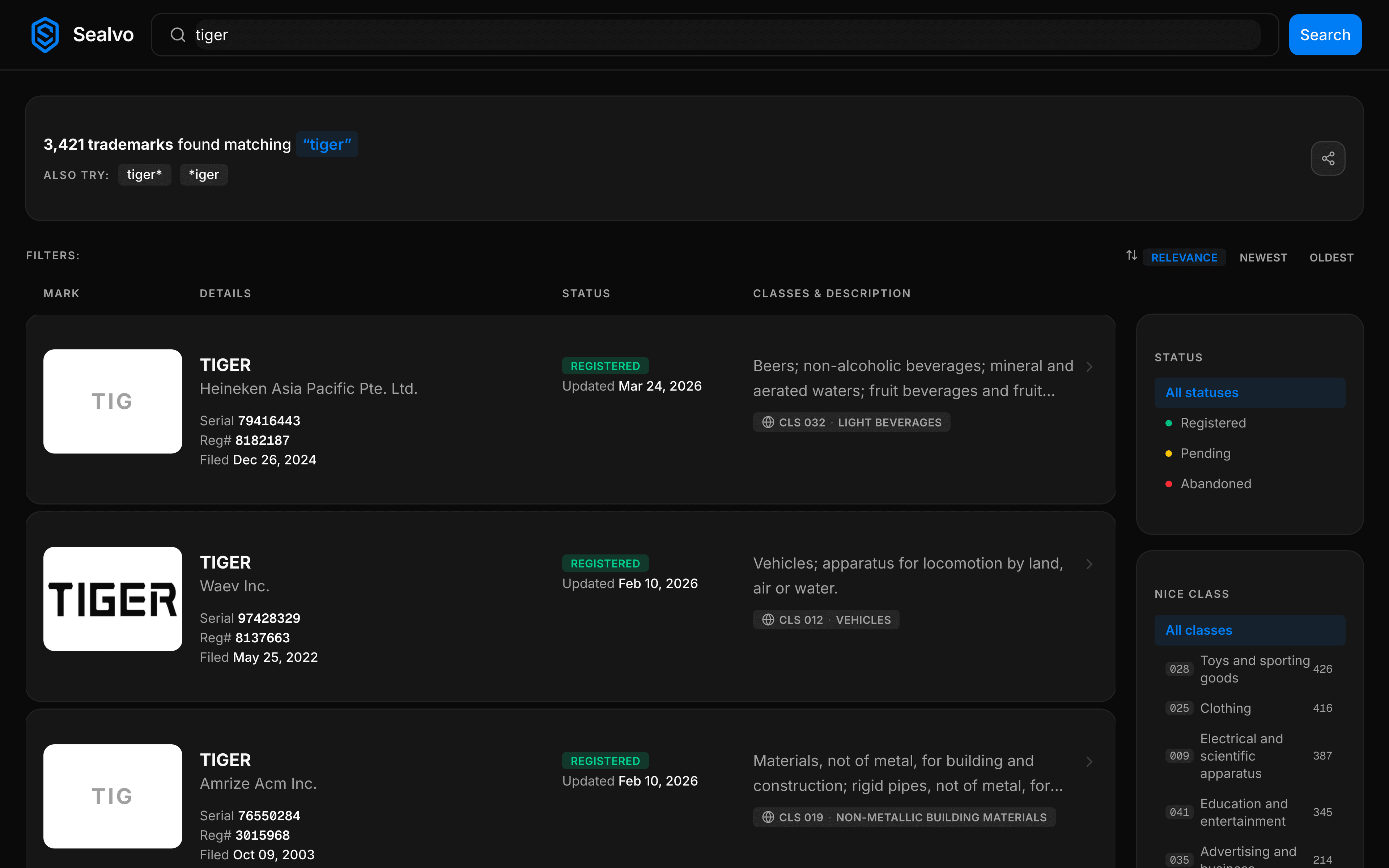
When you search trademarks on Sealvo, filtering by class lets you see only the marks registered for goods and services in your category. This cuts through irrelevant results and surfaces the ones that actually matter for your business.
The classes you're most likely to need
You don't need to memorize all 45. Here are the ones that come up most often for startups and growing brands:
Goods (Classes 1–34)
- Class 9 — Computer hardware, software, apps, electronics, scientific instruments. If you're building any kind of tech product, this is usually in your list.
- Class 16 — Paper goods, printed materials, stationery, educational publications. Relevant for publishers, content businesses, printed products.
- Class 25 — Clothing, footwear, headwear. The most heavily contested class in the USPTO database — it hosts over a million registrations including almost every major fashion brand.
- Class 28 — Games, toys, sporting goods. Relevant for consumer products, games, and fitness equipment.
- Class 30 — Coffee, tea, confectionery, baked goods. Food and beverage brands often need both this and Class 29 (processed foods).
- Class 32 — Beer, water, soft drinks, non-alcoholic beverages. Relevant for most beverage startups.
- Class 33 — Alcoholic beverages (other than beer). Wine, spirits, hard cider, hard seltzer.
Services (Classes 35–45)
- Class 35 — Business services, advertising, retail. Almost every brand that sells things to consumers needs this class. "Retail store services" is listed here.
- Class 36 — Financial services, insurance, real estate. Fintech companies typically need this alongside Class 9.
- Class 38 — Telecommunications, communication services. Social platforms, messaging apps, telecom companies.
- Class 41 — Education, entertainment, training, cultural activities. Online learning platforms, media companies, event organizers.
- Class 42 — Technology services, SaaS, IT consulting, research. The most common class for SaaS companies. "Software as a service" lives here.
- Class 44 — Medical services, health care, beauty. Telehealth companies, wellness brands, healthcare services.
- Class 45 — Legal services, personal protection, social services. Law firms, legal tech companies.
Most businesses need more than one class
A SaaS company offering a mobile app might need Class 9 (the software itself) and Class 42 (the service). A clothing brand that also runs a retail website might need Class 25 (the clothes) and Class 35 (retail services).
This is worth discussing with an attorney because each class adds cost to your filing. Some classes are genuinely necessary for full protection; others are nice-to-haves. Your attorney can help you figure out which ones matter most for your business model.
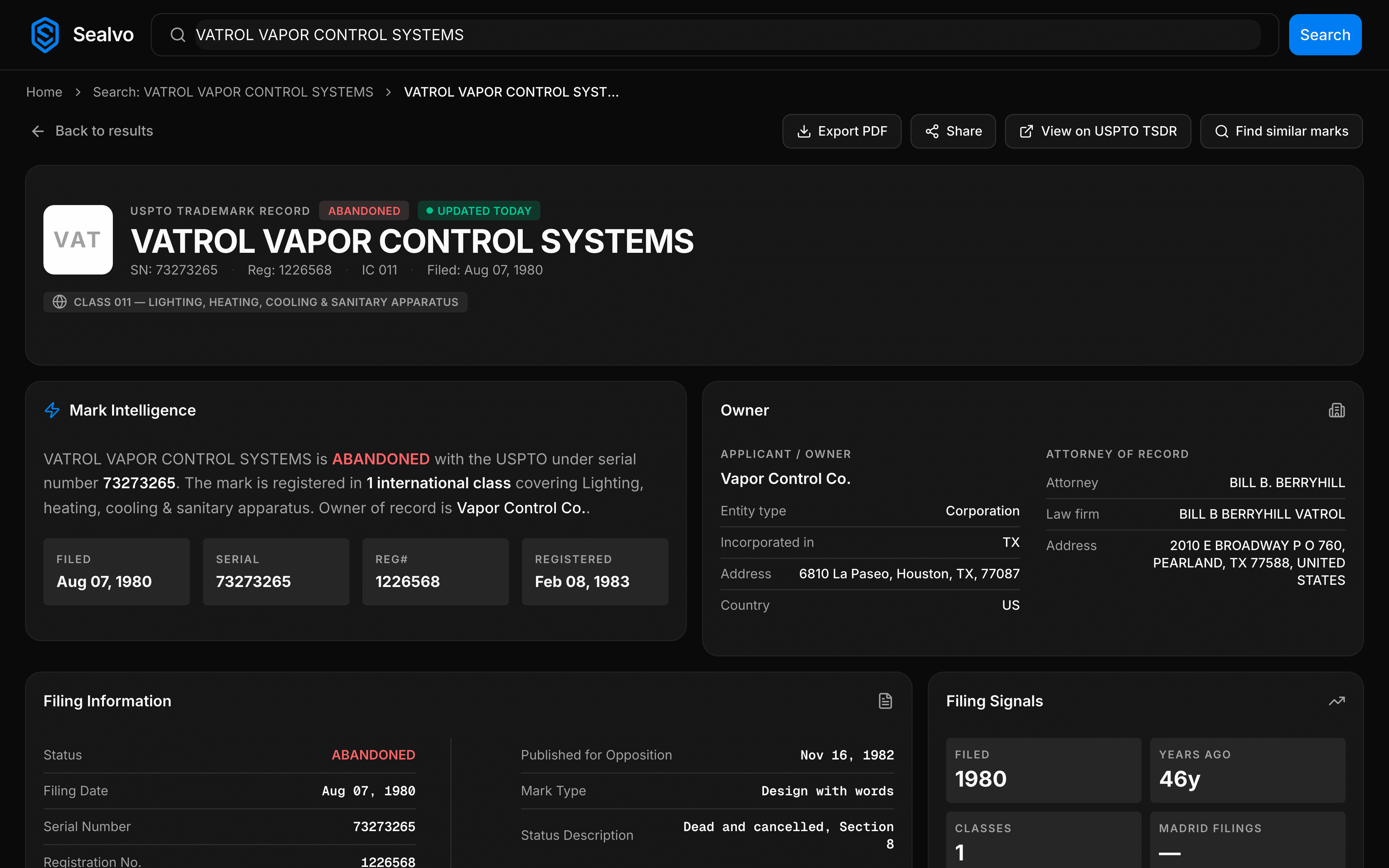
How to find marks by class on Sealvo
When you run a search on Sealvo, the class filter is in the left panel. You can select one or more classes to narrow your results. If you're searching for potential conflicts before filing, filter to the classes you plan to file in — those are the registrations that could block you.
You can also use class filters to do competitive research: search a keyword in your industry and filter to your class to see who's already staked out territory there.
Finding the right class for your goods or services
The WIPO maintains a searchable database of acceptable identifications of goods and services — it's called the ID Manual at the USPTO. But honestly, the easiest starting point is to search for competitors or existing brands similar to yours on Sealvo and see which classes they filed in. If three SaaS companies in your space all have Class 42 registrations, that's a strong signal you need it too.
Want to see which trademarks are registered in your class? Search Sealvo by keyword and filter by Nice class to see exactly what's already out there.