When you search the USPTO trademark database, every record has a status. Most people see "Abandoned" and assume it's free to use. Or they see "Pending" and assume it's blocked. Both of those assumptions can get you into trouble.
The three main trademark statuses — Registered, Pending, and Abandoned — each tell a different story about what rights exist and what they mean for your brand. Here's what each one actually means, with no legal jargon.
Registered
A Registered trademark is the real thing. The USPTO examined the application, found no conflicts, published it for opposition, and issued a registration certificate. The owner now has exclusive nationwide rights to use that mark for the goods and services listed in the registration.
Registered marks use the ® symbol. In a dispute, registration gives the owner a legal presumption that the mark is valid and that they own it — the burden shifts to anyone challenging them to prove otherwise.
What it means for you: If a Registered mark covers the same or similar goods/services as what you're doing, it can block your registration and give the owner grounds to send a cease-and-desist. Take these seriously. Check the class descriptions carefully — a registered "APOLLO" for software doesn't automatically block "APOLLO" for furniture.
Registration must be maintained. Owners must file a Section 8 declaration between years 5 and 6 proving continued use, and renew every 10 years. If they don't, the registration gets cancelled. Sealvo's mark detail pages show renewal dates and whether section 8 has been accepted.
Pending
A Pending mark has been filed but not yet registered. The application is somewhere in the USPTO examination pipeline — it could be waiting for an examiner, under examination, published for opposition, or in an opposition proceeding.
Pending marks use the ™ symbol. The owner doesn't have full registered rights yet, but filing establishes a "constructive use" date — meaning if the mark eventually registers, it backdates protection to the filing date. This matters because if you filed after them and their mark registers, your later filing loses.
What it means for you: A pending mark in your space is a yellow flag, not a red one. It might register, it might not. Some pending applications get abandoned due to office actions, oppositions, or the applicant simply giving up. But you should not adopt a name with a conflicting pending application and assume you're safe — if it registers, you could face a dispute even if you've been using the name for months.
If you're serious about a name that has a conflicting pending application, have an attorney evaluate it. The pending application's serial number is visible on Sealvo — you can track its prosecution history to see whether it's progressing or stalled.
Abandoned
An Abandoned mark is no longer active in the USPTO system. The application or registration was terminated — usually because the applicant didn't respond to an office action, failed to file required maintenance documents, or voluntarily withdrew.
This is where people get into trouble. "Abandoned" sounds like "free to use," but that's not always true.
Common law rights can survive abandonment. If a company used a mark in commerce for years and then let the USPTO registration lapse, they may still have common law trademark rights based on actual use. Common law rights don't show up in the USPTO database — they exist simply from using the mark in connection with goods or services. These rights are geographically limited to where the mark was actually used, but they're real.
What it means for you: An abandoned mark in your category is a softer concern than a live one, but it's not a free pass. Check how long the company operated under that name, whether they still exist, and whether they've transitioned to a new mark. For anything significant, a quick attorney consultation is worth the peace of mind.
That said — many abandoned marks are genuinely free. Applications get abandoned all the time for procedural reasons: the applicant didn't respond to an office action, went out of business, or simply chose a different name. The abandonment date and reason are visible in the prosecution history on Sealvo.
One more: Cancelled
You'll occasionally see "Cancelled" as a status. This applies to marks that were registered but then had their registration cancelled — usually because the owner failed to file the required Section 8 maintenance declaration, or the registration was cancelled through a TTAB proceeding. Practically, it functions similarly to Abandoned.
How to filter by status on Sealvo
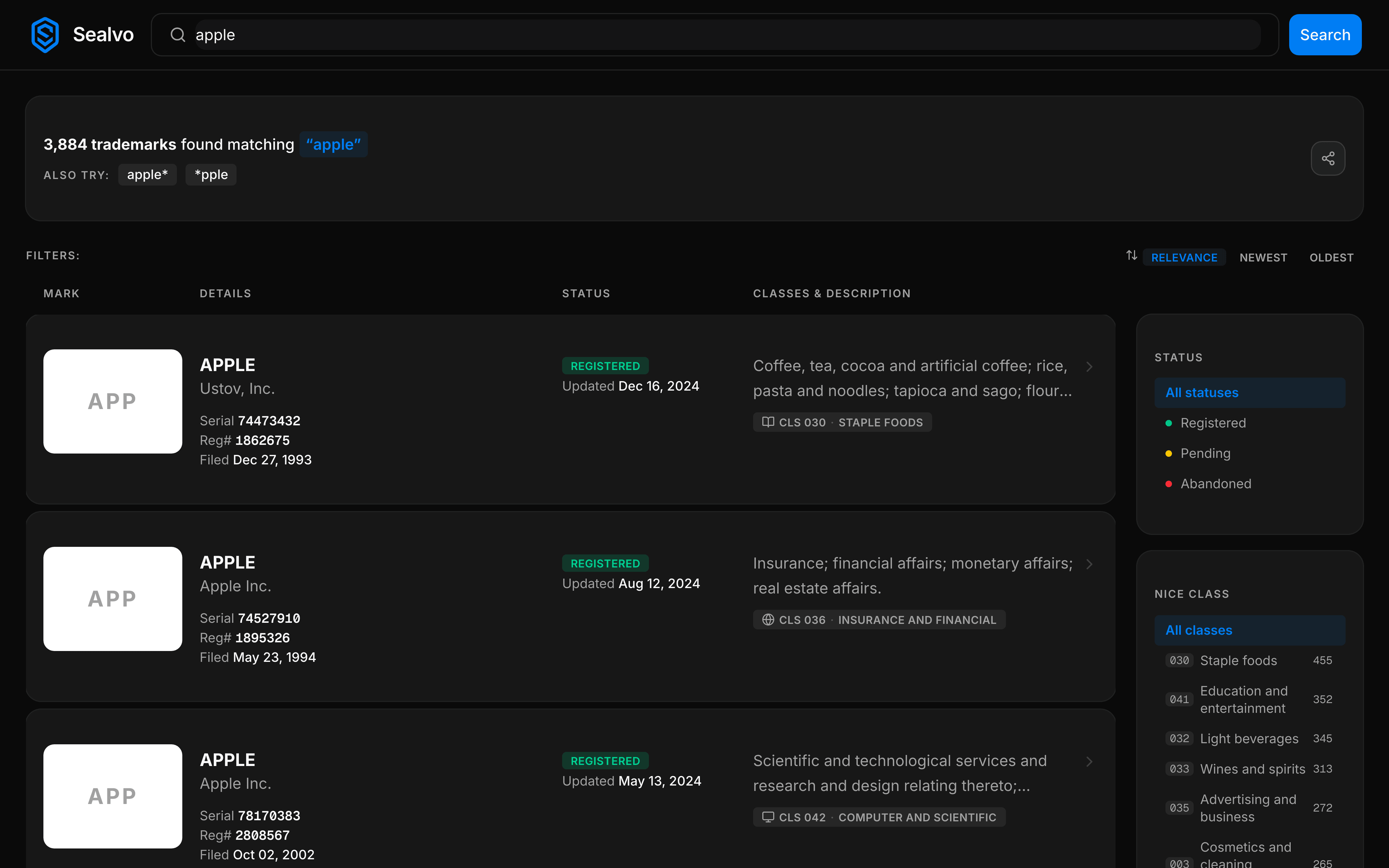
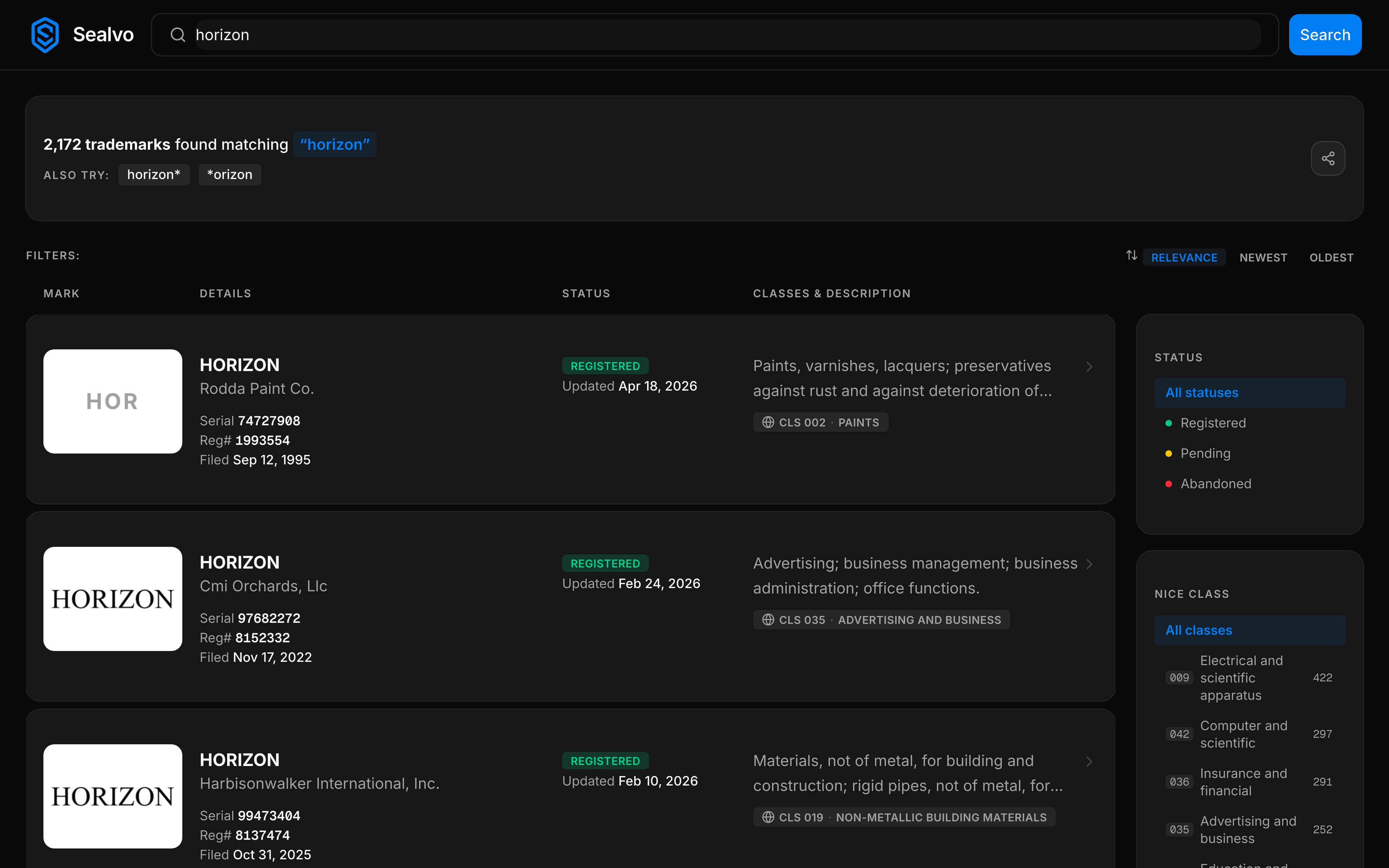
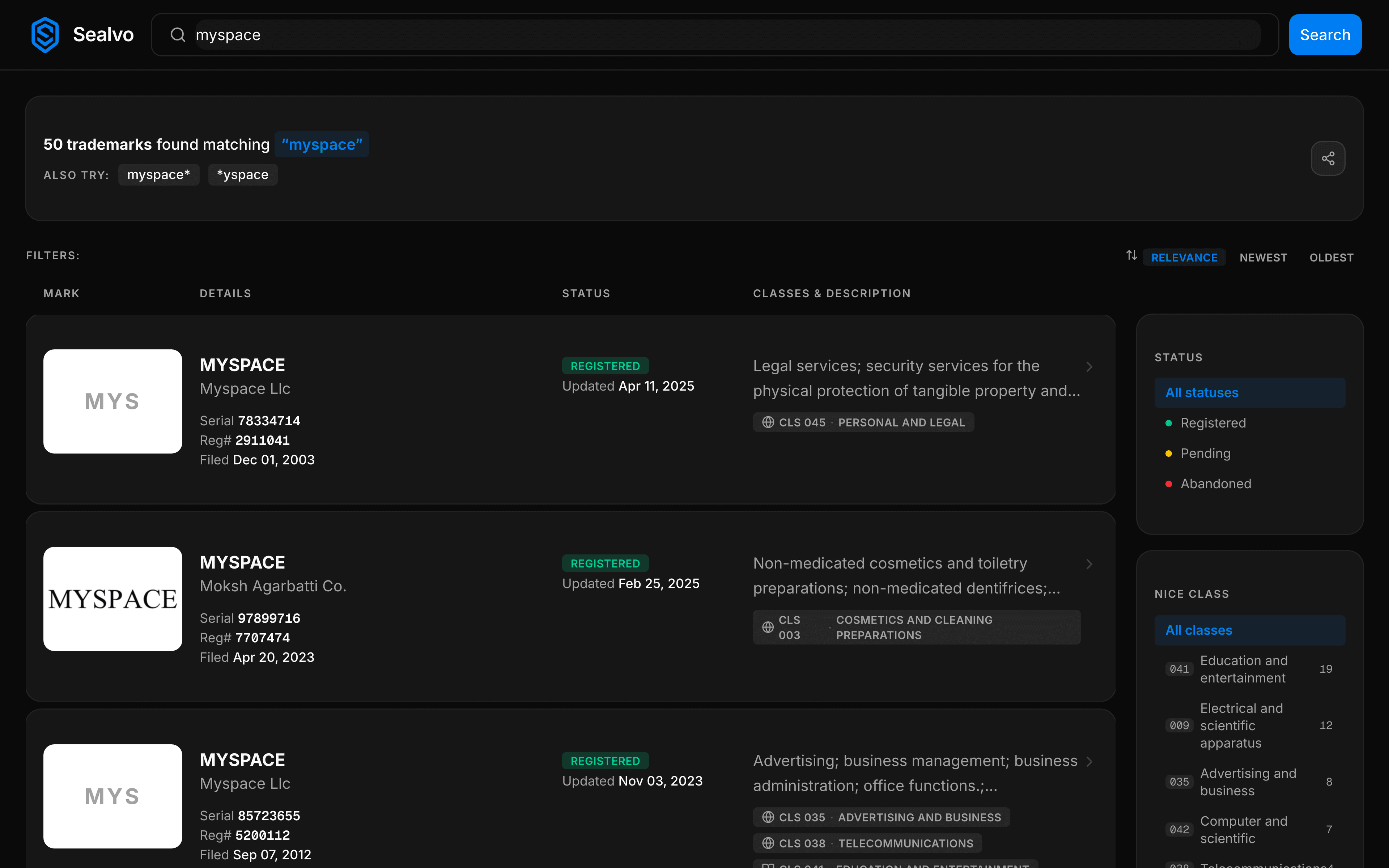
When you run a search on Sealvo, use the Status filter in the left panel to narrow results. This is useful when you want to:
- See only live marks that can actually block you (filter to Registered + Pending)
- Find marks that were abandoned in your category that you might want to adopt
- Research how active a competitor's trademark portfolio is

The bottom line: Registered marks demand attention, Pending marks deserve caution, and Abandoned marks warrant investigation before assuming they're available. Search the full USPTO database on Sealvo to see status across all 15 million records.