Trademarking your business name is one of the more concrete things you can do to protect what you're building. It gives you exclusive rights to use the name nationwide, the legal presumption that you own it, and the ability to stop others from using confusingly similar names in your industry.
The process takes 12–18 months and starts with a search. Here's what to do, in order.
Before you do anything: search first
The biggest mistake people make is filing without searching. If someone already has a registered trademark on the name — or something confusingly similar — the USPTO will reject your application. And you'll have paid the filing fee for nothing.
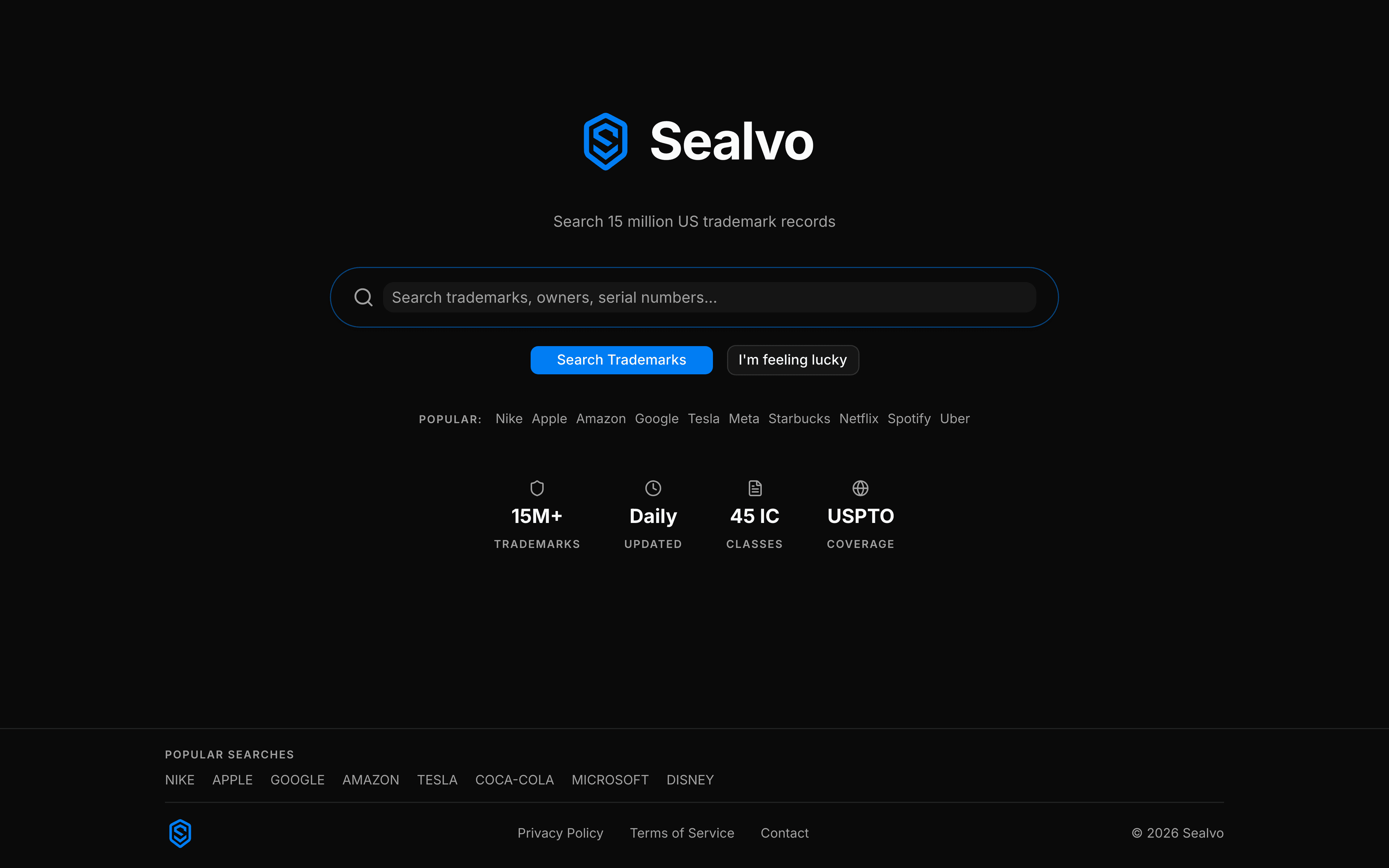
Search the USPTO database on Sealvo before you do anything else. Search your exact name, then phonetic variations, then individual words from the name if it's a compound. Filter to your product or service category using the Nice class filter — a conflicting mark in a completely different industry matters less than one in yours.
What you're looking for: any Registered or Pending marks that cover similar goods/services and sound or look like your name. If you find something close, don't assume it's fine — that's a decision for an attorney.
Decide what you're trademarking
Trademark protection covers the mark as used in commerce. That means you have choices:
- Standard character mark — protects the name in any font, size, or style. This is usually what businesses want. "SEALVO" as a standard character mark would protect that word across all presentations.
- Stylized mark — protects a specific logo design or stylized version of the name. You'd file this in addition to a standard character mark if your visual identity is distinctive enough to matter.
- Composite mark — a combination of words and design elements. Useful when the logo and name are inseparable from your brand identity.
Most early-stage businesses start with a standard character mark for the name. If you have a distinctive logo, add a design mark later.
Pick your Nice classification classes
You don't trademark a name in general — you trademark it for specific goods or services. Those are organized into 45 categories called Nice Classes, and you pay $350 per class when filing (the base application fee as of January 2025).
Pick classes that accurately describe what your business does. Filing in too few classes leaves gaps; filing in too many is expensive and can trigger office actions if you claim services you don't actually provide.
Common ones for startups:
- Class 9 — Apps, software products, electronic devices
- Class 35 — Business services, online retail, advertising
- Class 42 — SaaS, IT services, technology consulting
- Class 41 — Education, training, online content
- Class 25 — Clothing and apparel
If you're unsure, our Nice Classification guide breaks down all 45 classes with examples.
Choose your filing basis
This is the detail that trips up most first-time applicants. The USPTO requires you to declare how you're using the mark:
- Use in commerce (Section 1(a)) — You're already using the mark in commerce — on products, in your store, in your app, etc. You'll need to submit a specimen showing this use (a screenshot of your website, a product label, etc.). This is the most straightforward path.
- Intent to use (Section 1(b)) — You have a bona fide intent to use the mark but haven't started yet. This reserves your priority date while you finalize the product. Once you start using it commercially, you'll need to file a Statement of Use (SOU) before the registration is issued. You have 6 months from the Notice of Allowance to file, with up to five 6-month extensions available.
If you're already actively using the name in your business, file under Section 1(a). If you're pre-launch, Section 1(b) lets you stake your claim early.
File the application
Applications are filed through the USPTO's TEAS system (Trademark Electronic Application System). You'll need:
- The mark name (and a logo file if you're filing a design mark)
- Your name and address (or your legal entity's name and address)
- The Nice classes and goods/services descriptions you're claiming
- Your filing basis (use in commerce or intent to use)
- For use-based applications: a specimen showing use in commerce
- Filing fee: $350/class (base fee). Using the USPTO's pre-approved ID Manual descriptions keeps your cost at $350/class. Custom descriptions add a $200/class surcharge.
Using pre-approved descriptions from the USPTO's ID Manual is more restrictive upfront but tends to result in fewer Office Actions because the descriptions are already acceptable to examiners — and it avoids the $200/class surcharge for custom language.
What happens after you file
The USPTO assigns an examining attorney to your application. After about 3–4 months, they review it for technical issues and conflicts.
If approved, your mark is published in the USPTO Official Gazette for a 30-day opposition period — any third party who believes your mark would harm them can file an opposition. If no one opposes, you get your registration certificate (for use-based applications) or a Notice of Allowance (for intent-to-use applications).
If the examiner has issues, you'll receive an Office Action — a letter describing what needs to be fixed. Common reasons include likelihood of confusion with an existing mark, descriptiveness of the mark, or issues with the specimen. You have 3 months to respond (extendable to 6 for a fee).
The full process from filing to registration typically takes 12–18 months when everything goes smoothly. Office actions and oppositions can extend this. For the full timeline breakdown, see our registration timeline guide.
Maintaining your trademark after registration
Registration isn't permanent — it requires upkeep. The two things to know:
- Section 8 declaration: Between years 5 and 6 after registration, you must file a declaration confirming you're still using the mark in commerce. Missing this cancels your registration.
- Renewal: Registrations must be renewed every 10 years. The renewal window opens 1 year before the anniversary date.
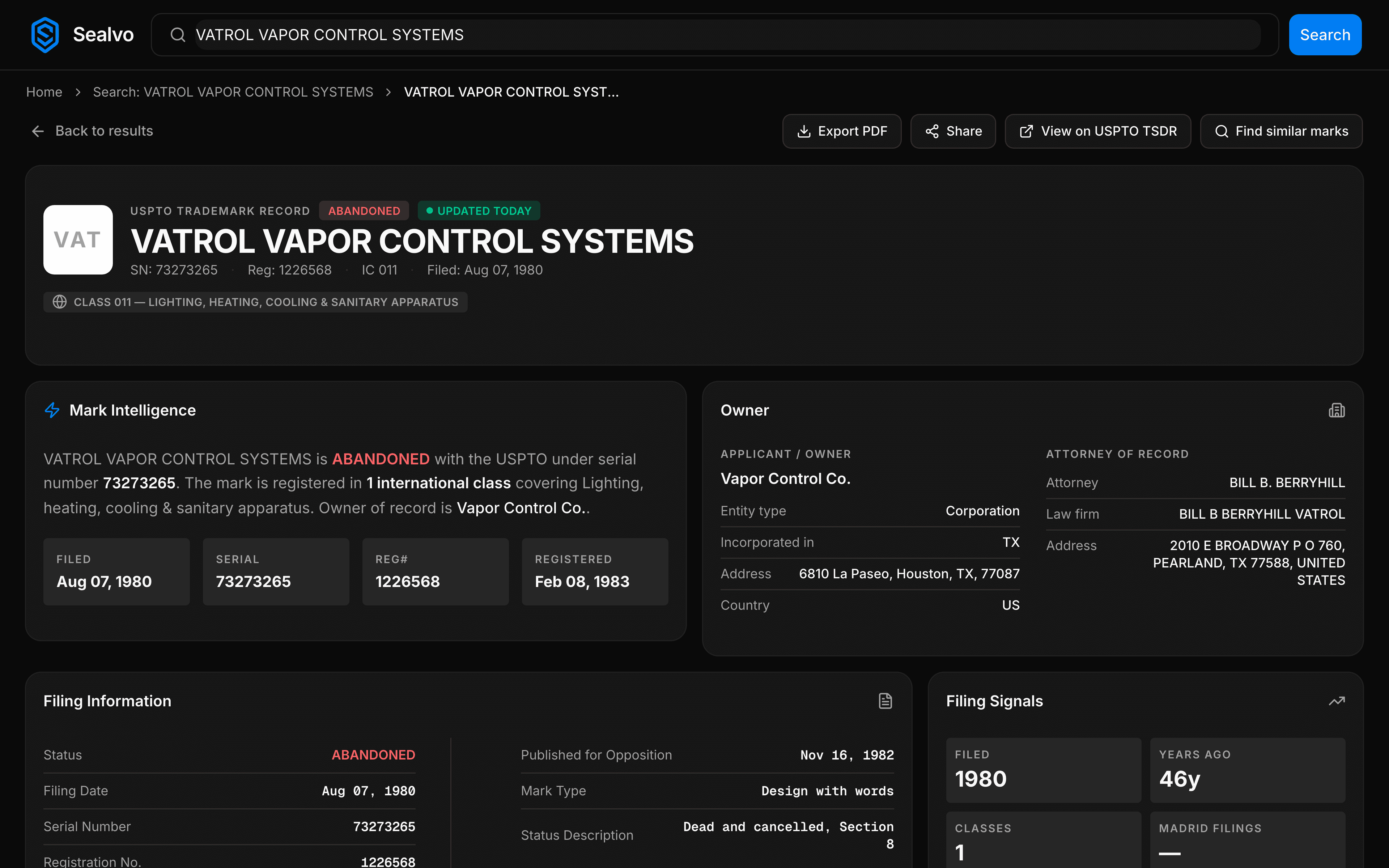
These deadlines don't send you automatic reminders. Track them. On Sealvo, every mark detail page shows the registration date and renewal status — useful for monitoring both your own marks and a competitor's.
Do you need an attorney?
You can file a trademark application without an attorney — the USPTO allows individuals and businesses to file directly. But there are a few situations where having a trademark attorney is worth it:
- You found marks in the search that look like they could conflict, and you want a professional clearance opinion before investing in the name
- Your goods/services description is complex or multi-layered and you want to make sure you're claiming the right scope
- You receive an Office Action and the examiner is citing likelihood of confusion with a strong existing mark
- Another party opposes your application
For a straightforward application with a clear name and no conflicts in the search, many businesses file themselves successfully. The risk is getting an Office Action and not knowing how to respond effectively — which is where attorney help pays off most.
The first step is always the same: search before you file. Check the USPTO database on Sealvo — free, instant, 15 million records. Know what you're working with before you spend anything on filing fees.